On October 23rd last year, I wrote a piece on this site called “The great ADP lie and other brand illusions” where I talked about companies that outright lie to their customers and get away with it.
As the head of Toyota talked with Congress yesterday, he said that the things that caused the issues that have led to the recall of over eight million vehicles were basically the result of their push to unseat GM as the world’s leading car maker (which they did). Their principle of relentless pursuit of the highest quality product, the core of their brand promise, took a back seat, if you will, to their growth goal. It was the first time in their 52 year history that they had a recall compared with over 100 recalls just last year among the major US auto makers, by the way. This shouldn’t be such a big deal.
I don’t have any proof of this, but I think that explanation is hogwash, and I think they know it’s hogwash, but I think they felt they this was the best spin to put on this story to minimize brand damage. Part of their problem is that they aren’t 100% sure the fixes they have come up with will solve the problems that have led to the recalls.
Why aren’t they sure? Well, depending on who you listen to, these problems aren’t really problems – they are partly operator error and partly a misunderstanding of the product. It’s unsurprising that the US press is all over this – it’s a huge boost for the US automakers to paint Toyota in a bad light, and that’s just the way it is. And if a problem isn’t really a problem, then you can’t be 100% confident of your fix, right? But you can’t really come out and blame your customer, so you are stuck.
If you listen to another crowd and there really are issues, then it still wasn’t the result of the entire company relaxing their quality standards in pursuit of GM, it was one or two, or a handful of people that did a poor job of engineering, and testing the parts in question. Individuals with names, not the entire corporate entity, as Toyota seems to be trying to make us think. It almost has the same ring as the Tiger Woods apology last week – when he said, look, I am not perfect, I made mistakes, and I am taking actions to fix them.
In a very different way, Toyota had that same perfect image that Tiger had.
People bought, and liked, the narrative when Tiger delivered it, so why not reuse it to paint Toyota in a better light. It leaves the door open for (more) Toyota errors, but it has the promise that they are working to prevent them in the future – it would be silly for Toyota to say it’s never going to happen again.
The point is that when companies deliver a message to their customers, facts may or may not play into the message – and assigning blame will rarely happen because that implies the problem will never happen again. It’s not a matter of lying to the customer, it’s saying things that will minimize the damage, but also maintain (or try to regain) their trust that you will do what you can to avoid it in the future.
-Ric
 With Twitter and Facebook, people have to explicitly reach out to “follow” or “friend” a person in Twitter and Facebook, respectively. And with varying degrees, once you are a friend or a follower on those sites, you can see who else has been “approved” by the user as a friend or a follower. Google decided to skip that step for Buzz users, in part because they “could” in the sense that Buzz is connected to a person’s G-mail account and the G-mail account has the names and e-mail addresses of all of the people you contact on G-mail. So G-mail decided that for everyone who opted into Buzz, they would automatically connect users in the friend/follow sense with their most frequently contacted G-mail contacts. In a certain sense they did it because they could, the technology was there. It harkens back to the old British explorer George Mallory who was one of the first people to try to climb Mount Everest, and when asked why he was doing it, he replied “because it’s there.”
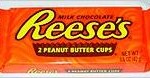 The way I see this, it’s a little bit like peanut butter and chocolate, two great tastes you might not expect to go well together. People are talking about the possible acquisition of video company Netflix by Amazon, and they are speculating that it has to do with movies and streaming media. Maybe, but I don’t think that’s why this acquisition would be so powerful, and I am frankly surprised I haven’t heard more people talking about this.
 One of the biggest mistakes I think Amazon has been making all along is ignoring the buying history of customers. They never recommend anything to me based on my buying history. They tell me what other people have bought when I buy a certain book or a tent or a squash racket, but they don’t seem to really pay attention to what I buy and what I like. And I buy a LOT on Amazon. They are crazy to have ignored this for so long.