Back in May, David Streitfeld wrote this article about how, and why, people in the US aren’t paying their mortgages. While it was one of the most troubling articles I have read in a long time, since then, I have spoken with a lot of people who think it’s crazy to make mortgage payments these days. The thinking is that it takes at least two years to foreclose, and when they do foreclose, the house will be sold at auction for a fraction of the cost, and if people have the money, they can pay cash for the house and not need another mortgage and have saved a lot of money.
But as I thought through that, I realized that it meant that people don’t care what their credit rating is. If just about anyone can get a credit card, which seems to be the case, then it starts to look like the credit score the some of us have worked so hard to keep high, is starting to matter less and less in transactions. I realize it’s not quite that simple, but the trend is hard to deny, or ignore.
So just as the once sacred credit rating is now becoming junk, it’s not so surprising that a different way to judge us is emerging. The “reputation score” – that is, how trustworthy we are to participate in a particular transaction.
Jenna Wortham touched on this subject in this article last week, talking about companies like GroupOn, SnapGoods, NeighborGoods, ShareSomeSugar, AirBnB, and KickStarter that allow you to rent things from friends and neighbors in your community. In the specific case in the article, Wortham rented a robotic vacuum cleaner for something like $10 a day. This starts to sound a little bit like Ebay for rentals, and I think it is in many ways, and just as Ebay keeps track of feedback about things you sell through their site through what amounts to a reputation score, these other sites have to do the same.
That all makes perfect sense to me, but there seems to be one problem/opportunity here that’s being overlooked. First of all, a site like SnapGoods only exposes things you want to rent to friends of yours on FaceBook and people you know through MeetUp. That’s probably OK for the younger crowd that has thousands of Facebook friends, but for people in their 40s (like me) it’s more common to have 500 or fewer friends, and I don’t think there’s enough of a marketplace in a pool that size for the model to work. The other side of that is for people in their 20s with 3,000 friends, they can’t know and trust all of those people, so there’s a flaw in the model on that end.
But the bigger issue is that if all of these sites have their own reputation score tracker, shouldn’t there be some reputation aggregation going on, like a credit rating, so we can go to one place to see what the person can be trusted to do. In this case it has to be a little bit more complex, because there’s reputation for paying (large amounts, and small amounts), being on time, taking good care of the things that they rent, and so forth, but it’s not all that complex. So there needs to be some rethinking there, but I would suggest that there be something like MyIDPal (a little bit like PayPal) that allows you to protect your identity, and transact while adding more nuance to your reputation.
I bet in a year or two there’s a service (even a standard?) for managing reputation scores that places like SnapGoods will have to, well, snap to, so that people can trust the transaction.
-Ric
 I heard that the restaurant chain Pizza Hut just decided to lower the price of their smallest pizza to $8, from $10. I couldn’t help but wonder who cares about saving $2 on dinner so much so that if the pizza was $10 yesterday they would have chosen something else for dinner, but now that it’s $8, they are there. Of course it’s an incomplete math problem if you stop there. Unless a person is in a food court where they are choosing between Pizza Hut, a teriyaki chicken place, and a Mexican place, that’s one thing, but in most cases, there is time involved in going to the Pizza Hut, and probably the gas (if you aren’t taking the bus). These things add up, and while I doubt many people calculate all of these things when they make their decision, it strikes me as a bold assumption on the part of the Pizza Hut folks that by changing nothing else, lowering the cost of their product will bring more customers. No change in the quality of the ingredients, no change in the recipe, no change in the location of the restaurant, no change in how clean the restaurant is, no change in how friendly the employees of the restaurant are, or the hours of operation.
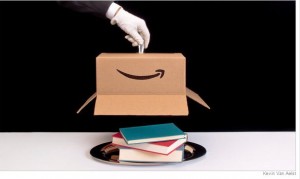 Amazon Prime’s fee is a little bit like paying for an upgrade on a flight when you don’t have enough miles or awards to do it for free. If you buy enough from amazon, you get free two day shipping for everything you buy, which is GREAT. If you don’t have enough purchases, they will charge you for the service. In my case, I rarely care whether the products arrive in two days or ten days, so I would never pay for Prime. It would be one thing if I were buying perishable goods or if I were a last minute gift shopper or something like that, but I would never pay to be a Prime customer. Having said that, it makes sense to me that Amazon charges people for this if they don’t “earn” it, but there is an actual cost to shipping, and I wonder how they calculate how much to charge? They must crunch the numbers to look at the total actual cost and then divide that by some number of customers that don’t earn it. You could also do it based on the number of packages, but because of the wide range of quantities purchased by customers, that’s probably not as good a metric. Anyway . . . I would be curious to know where the number comes from.